THE HOME DEPOT ANALYTICS GROUP
Customer Retention
For any company, a customer base and workforce are two of the key elements in the overall function of a business. Companies without a workforce that reflects their customer base are at a strategic disadvantage and are missing the broader perspective provided by a more diverse employee base (Casper, 2016). Companies often do a good job hiring and recruiting employees, but don’t always do a good job at developing and retraining them once they’re through the door. This hurts the customer, who comes to seek the expertise of an employee or expects a certain level of experience when they visit. The customer base is the core of any marketing and sales efforts. Having a strong and loyal customer base can help increase recurring revenue and have a strong sales program to build from, but only if the workforce reflects the customer base (Rock Content, 2021).
Customer Approach
When it comes to approaching or identifying a customer base there are two basic questions to ask, who are your customers? How do you plan to solicit or retain them? The Home Depot has three distinct types of customers - contractor pros, DIY customers, and "Do It For Me" customers. Each type has different requirements, and all must be catered for.
But to prosper in the digital age THD needs to cater to the modern customer's precise needs and preferences. THD identifies the precise needs and preferences through machine learning, which analyzes the online behavior of customers in order to guide them precisely to where they want to be in Home Depot's eCommerce store. When soliciting or retaining customers, THD makes it a point to go where the customer is going and have them shop their way, any way they want, which means combining mobile, online, and in-store experiences into one seamless experience (eTail, 2022).
Challenges of Expanding Customer Base
The Home Depot has three main customer segments as mentioned previously. When it comes to THD, some challenges of expanding its customer base or even retaining its customers seem to fluctuate with the market and economy. For example, the Covid pandemic created a whirlwind of growth for THD. As people were forced to stay home and work from home, it caused its customers, primarily DIYers, to focus more on home improvement tasks that were otherwise put off. This created a surge in spending on home improvement projects that lead to quick and rapid growth for THD. Now, post-pandemic, the market, and economy have started to “normalize”, slowing down the growth. But with the increased housing market, created a different surge in spending and revenue but this time the Pro services and contractor’s customer segments created slower but steady growth for THD over time.
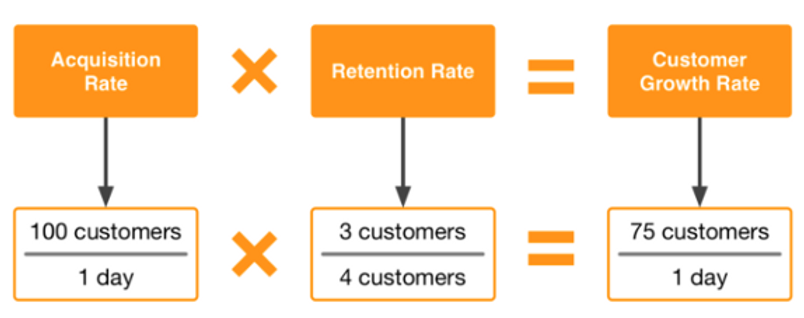
Below is a basic customer growth model that explains the rate of growth for THD. The number of customers that a company has depends on how well it acquires new customers and retains existing ones. On the other hand, how often those customers buy its products and how much they spend per transaction is based on how well the product and the entire customer experience are able to engage them (Paluch, 2017).